Kovalam.com 13 Jun 2026 Culture & Local Insights
The Definitive Guide to the Geographical Location of Kovalam: Mapping Kerala’s Paradise
Situated in the Indian state of Kerala, Kovalam is basically a beach town, where tourists can enjoy the glimpse of deep blue Arabian Sea. Long before it evolved into an internationally acclaimed vacation hotspot, this peaceful corner of South India was a sleepy fishing village tucked away amid dense palm groves. The geographic location of this place actually made it an exquisite as well as unique tourist place, serving as a natural baseline for coastal exploration, luxury wellness stays, and marine adventure.
For travelers and geographers alike, understanding the unique spatial orientation and physical features of Kovalam explains why it captures the hearts of millions of visitors year after year.
Proximity to Thiruvananthapuram and Regional Accessibility
One of the greatest geographic advantages of this paradise is its incredible proximity to major urban transit nodes. This beach town is located at a distance of 16KM from the Thiruvananthapuram city (historically known as Trivandrum), which serves as the capital city of Kerala.
Because it sits just a brief, scenic drive away from the Thiruvananthapuram International Airport and the central railway terminal, travelers can step off a flight or train and find themselves walking along the surf within less than thirty minutes. This seamless connectivity makes it an effortless getaway for both long-term international travelers and weekend domestic vacationers.
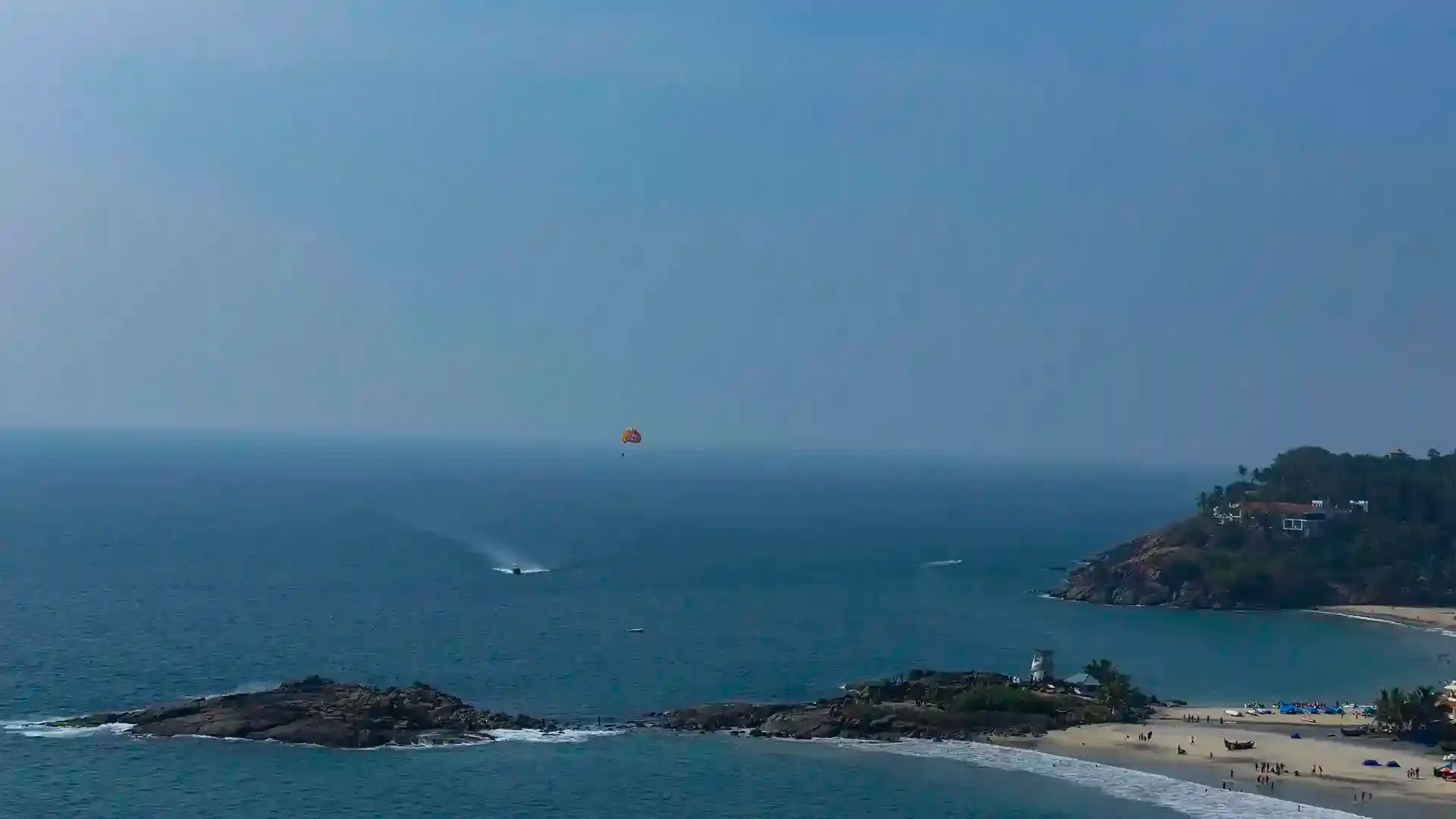
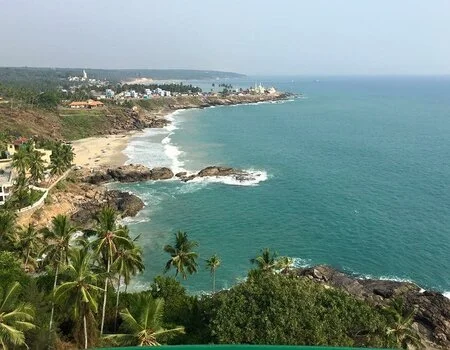
The beach town has three major beaches which are separated by rocky outcroppings. These massive promontories of resilient stone break the coastal currents, forming three distinct crescent bays that shelve gently into the ocean.
Detailed Exploration of Kovalam's Three Major Beach Bays
1. Lighthouse Beach: The Crowded Tourist Center
Lighthouse Beach is the most popular beach of Kovalam which also is the largest among them. Mostly, the tourists visit this beach and often it will be found crowded with tourists from different parts of the world. The lively shoreline is flanked by an open-air boardwalk packed with multi-cuisine seafood restaurants, Ayurvedic massage parlors, and handicraft boutiques.
Due to the location of a 35 meters high old Vizhinjam Lighthouse, this southernmost beach of Kovalam is named as Lighthouse beach. Built firmly atop a high granite headland, the tower remains an architectural marvel. Visitors can climb its winding stairs to witness a sweeping, panoramic view of the entire Keralite coastline. As night falls, the giant light beams from the old lighthouse provide an unearthly charm to the beach, casting a rhythmic, silver glow across the breaking waves.
2. Hawah Beach: A Secluded Stretch with a Fascinating Past
Hawah Beach which is also known as Eve’s Beach is located beside the Lighthouse Beach, just a short walk over the intervening rocky divider. This beach is visited by tourists often, but it is mainly dedicated for the fishermen. Fishing is one of the greatest sources of earning for the people of Kovalam and this beach provides a lot of fishes to the fishermen, who maintain their traditional lifestyles alongside modern tourism structures.
The beach experiences a lesser number of tourists than Lighthouse Beach and that is why this place is suitable for those who are in search of serenity or peace. It offers a quieter environment where one can easily read a book or meditate to the sound of rolling water.
Hawah Beach, which is the second largest among the beaches of Kovalam, has its name derived from the name of some European women who frequented its shores decades ago. Though topless bathing is banned in India today under national public decency laws, a few decades earlier, it was a topless beach, and the most amazing fact is that it was the first topless beach of India during the peak of the global hippie trail movement in the 1970s.
Today, the beach’s natural ecosystem is the main attraction; this beach also attracts a lot of birds in different seasons and an array of wild animals can be explored here, which are mostly water-living animals such as marine crabs, sea turtles, and unique coastal shorebirds that feast on the daily fishing leftovers.
3. Samudra Beach: The Ultimate Seaport Sanctuary
Further to the north lies a stretch of sand that feels worlds away from the energetic boardwalks of the south. Samudra Beach is completely separated from other two major beaches of Kovalam, through a large promontory of towering rocks.
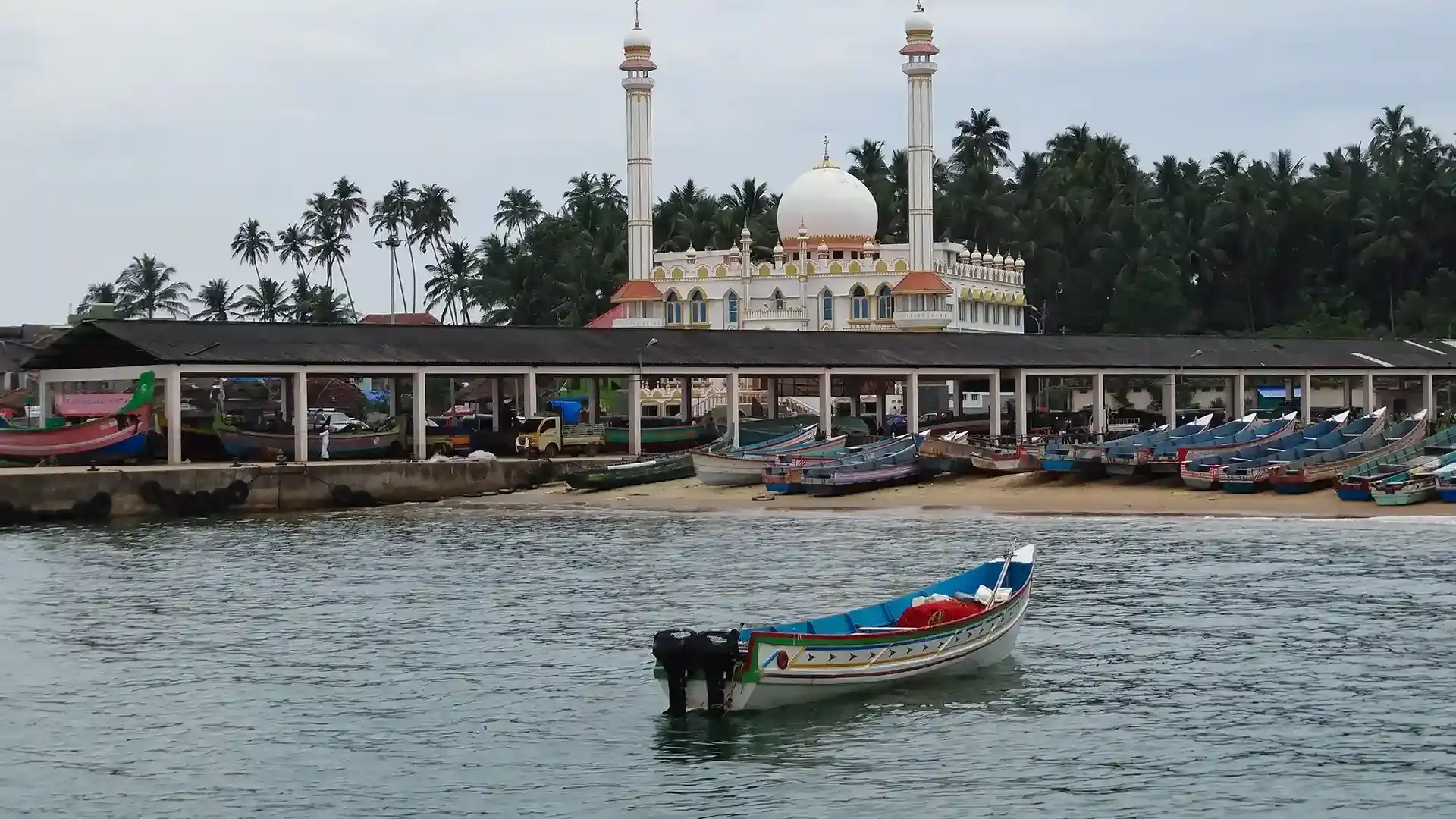
The beach experiences a lesser number of tourists in comparison to the other two and it is also a dedicated spot for the fishing business. Here, tourism steps into the background, allowing the authentic coastal lifestyle of Kerala to take center stage. You will often find local fishermen arranging their boats to go for a fishing voyage, repairing their sprawling nylon nets, or chanting traditional rowing songs as they brave the breaking surf in their wooden outriggers.
Exploring the Hidden Gems: Ashoka Beach and Beyond
Apart from these three major beaches, there are a few other beaches present in Kovalam, and one of the famous amongst them is Ashoka Beach. This is located at the Northern part of Kovalam, and this virgin or untouched beach provides exquisite views of nature, along with a complete aura of serenity. It remains almost entirely free from commercial shacks or loud crowds.
Tourists would love to see the views, like shallow sea water launching upon the beach rocks and creating amazing splashes of brilliant white foam. It is a dream location for landscape photographers looking to capture the raw power of the Arabian Sea.
To reach this beach, tourists can choose to take a walk from the Samudra beach via a simple coastal path. Alternatively, local transport and car services are there too for the tourists who prefer a direct, comfortable ride from their respective holiday resorts.
The Secret of the Black Sands: Ilmenite and Monazite Minerals
One of the most frequent surprises for first-time visitors is the unique coloration of the coastline. Due to its unique geographic location and climate, the sands of the beaches of Kovalam are neither golden, nor white; they are partially blackish in color.
- The Geological Explanation: This striking visual feature is not caused by pollution or dirt, but rather by the rich mineral wealth hidden within the geological veins of the Western Ghats mountains and washed down by Kerala's rivers.
Because of the presence of Ilmenite (a titanium-iron oxide mineral) and Monazite (a reddish-brown phosphate mineral containing rare-earth elements), the sand here appears a bit blackish. When the waves recede under the bright tropical sun, these heavy mineral grains form beautiful, shimmering metallic patterns across the shoreline, serving as a striking physical signature of Kovalam’s distinct place on the world map.
Useful Travel Information for Visitors
If you are planning an excursion to map out the unique geography of Kovalam yourself, keep these practical tips in mind:
- Best Commuting Methods: Hire a local auto-rickshaw or taxi to easily move between the beaches if you want to avoid hiking over the steep rocky promontories.
- Optimal Footwear: Wear sturdy water shoes or adventure sandals with excellent grip when exploring the rocky structures around Samudra and Ashoka beaches, as wet rocks can be highly slippery due to marine algae.
- Time of Day: Visit Lighthouse Beach at dusk to enjoy the magical unearthly charm of the lighthouse beams turning on against the setting sun.
Gallery

.webp)