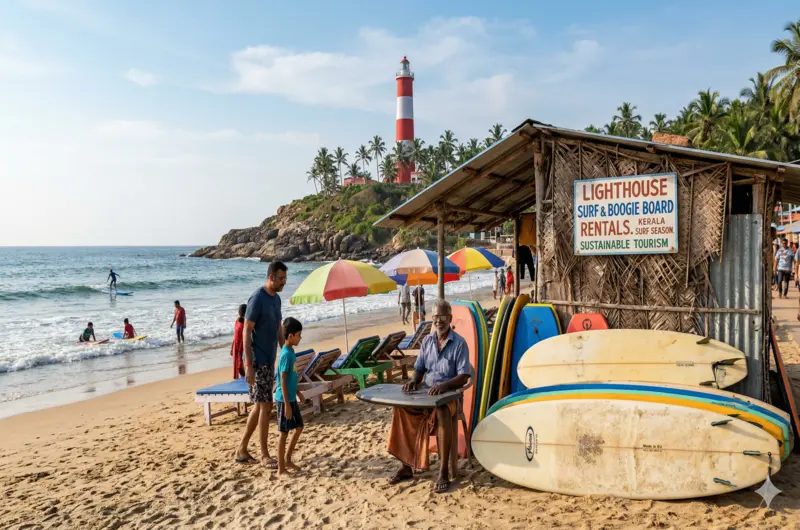
Living from Surfboards at Kovalam: The Soul of Lighthouse Beach
While the towering cliffs of Varkala often steal the limelight in Indian surfing magazines, there is a quieter, more rhythmic revolution happening on the shores of Kovalam. Known for its iconic striped lighthouse and crescent-shaped bays, Kovalam is carving out a unique niche in the global surf community. But the story of surfing here isn’t just about the waves; it’s about the people who make the sport possible—the surfboard vendors of Lighthouse Beach.
The Evolving Surf Scene in Kovalam
For decades, Kovalam was synonymous with yoga retreats and Ayurveda healing. However, the surge in adventure tourism has shifted the focus toward the Arabian Sea. While the waves here are generally more manageable and less intimidating than those at neighbouring breaks, this "gentle" reputation is exactly what makes Kovalam a breeding ground for new surfers.
The sport is picking up momentum, and with that growth comes a vital micro-economy. For many locals, the surfboard is more than a piece of sports equipment; it is a lifeline.
The Vendors: Resilience on the Shore
Walk along the promenade of Lighthouse Beach, and you will meet men and women who have turned the sand into their office. Interestingly, many of these vendors are individuals with health issues or physical disabilities. For them, the traditional, strenuous labour of the fishing industry or construction is not an option.
Renting out surfboards, boogie boards, sunbeds, and umbrellas offers a "stress-free" alternative—physically speaking—though it requires immense mental fortitude. To the casual tourist, they are simply providers of shade and sport. In reality, they are entrepreneurs who stand under the blistering Kerala sun from dawn until dusk, waiting for the right swell to bring in the right customer.
The Story of the Lighthouse Board Master
One of the most poignant stories on the beach is that of a local vendor who turned to surfboards when his eyesight began to fail. Unable to pursue traditional employment, he found opportunity in the generosity of the surfing community.
Years ago, a group of foreign travellers realized that shipping their aging boards back to Europe or the US was more expensive than the boards were worth. They left them behind, selling them for a nominal fee to this local man. Today, those same boards—maintained with care and patched with resin—allow him to earn a dignified living. He represents the "circular economy" of Kovalam, where nothing goes to waste and every board has a history.
Surfing vs. Boogie Boarding: What’s Trending?
While professional surfing requires significant skill and balance, boogie boards (bodyboards) have become the runaway favourite for the average tourist.
- Accessibility: Boogie boards can be ridden prone (on the belly) or on the knees.
- Safety: They are softer and more forgiving for beginners.
- Skill Gap: Unlike a longboard, you don’t need a week of lessons to enjoy a boogie board; you just need to time the white water correctly.
Vendors have noticed that while Americans and British tourists often seek out the technical challenge of a surfboard, domestic tourists and families are increasingly gravitating toward boogie boards, making them a staple of the rental business.
The Economics of the Beach
Running a rental business in Kovalam is a lesson in seasonal volatility.
1. The Peak Season (November to May): This is the "Golden Window." With clear skies and consistent swells, a vendor can earn upwards of Rs 1,000/- per day. During this time, the beach is a melting pot of international travelers.
2. The Monsoon Slack: From June to October, the income can drop to zero. The sea becomes too rough for casual rentals, and the rain keeps the crowds at bay.
3. Pricing Dynamics: Rates are rarely fixed. They are often hourly and highly negotiable based on the duration of use or the time of day.
Navigating Regulation and the Future
Sustainability for these vendors isn't just about the weather; it's about policy. Currently, vendors must obtain a yearly license from the Port Authority. However, the future remains uncertain. New regulations aim to prioritize families living below the poverty line in coastal areas for these licenses. While this aims to help the most vulnerable, it creates a sense of anxiety for established vendors who have spent decades building their small enterprises.
How to Support Local Surfing
If you are visiting Kovalam, your choice of where to rent matters. Choosing a local vendor over a large resort-affiliated shack ensures that your money goes directly into the hands of someone for whom that board is their primary source of income.
- Look for the small shacks: Often located near the southern end of the beach.
- Respect the equipment: These boards are often older and have been carefully maintained.
- Engage with the vendor: Ask about their story—many have been on this beach for thirty years and have seen the village transform into a global destination.
Surfing Tips for Kovalam
- Best Time to Surf: Early morning (6:00 AM – 9:00 AM) before the wind picks up.
- Wave Type: Beach break with sandy bottoms, making it relatively safe for wipeouts.
- Equipment: Most local boards are 7'0" to 9'0" foamies or older epoxy boards.
Kovalam may not be the "surf capital" of the world just yet, but it is the "heart capital" of the Indian coast. The sight of a teenager catching their first wave on a rented boogie board is a testament to the hard work of the vendors who stand watch on the shore. By supporting them, you aren't just renting a piece of fiberglass; you are supporting a legacy of resilience.
0 Comments
Post Comment