KOVALAM NEWS
Sunken Dutch Shipwreck off Anchuthengu Emerges as a Marine Biodiversity Haven
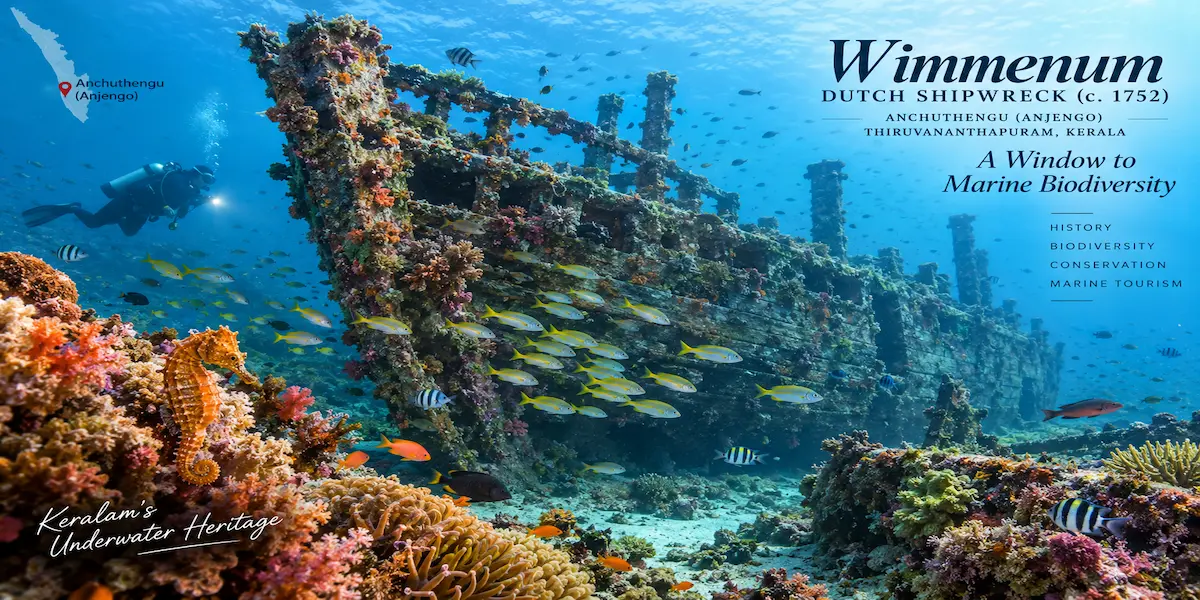
Image: AI-generated illustration
THIRUVANANTHAPURAM: A centuries-old Dutch shipwreck lying beneath the Arabian Sea off Anchuthengu (Anjengo) has emerged as a remarkable underwater habitat supporting a rich variety of marine life, highlighting the ecological and tourism potential of Kerala's coastal waters.
The wreck of the Dutch ship Wimmenum, located off the Anchuthengu coast, has become home to fish, corals and other marine organisms. Recent marine biodiversity documentation has highlighted how shipwrecks can develop into important artificial reef habitats, providing shelter and breeding grounds for a wide range of species. (Nature)
18th-century shipwreck becomes underwater habitat
The Wimmenum is an old Dutch vessel associated with the maritime history of the Malabar Coast. Historical records identify it as a Dutch East India Company ship built at Amsterdam in the 18th century. The wreck was identified off Anchuthengu after underwater exploration involving local fishermen, divers and marine researchers. (The New Indian Express)
Today, the remains of the vessel have been colonised by marine organisms. Photographs from underwater expeditions show large schools of fish swimming around the wreck, along with extensive coral and other marine growth.
A recent Nature India feature highlighted the work of divers and local fishers documenting marine life around shipwrecks and reefs along the Kerala coast. The feature noted that divers have been recording underwater biodiversity around the Dutch wreck off Anchuthengu as part of wider efforts to document India's marine ecosystems.
More than 200 marine species documented
The ecological importance of Kerala's shipwrecks was also highlighted by a Kerala University study that documented 212 species of marine macrofauna around shipwreck sites off Anchuthengu and Shanghumugham.
The recorded organisms included fish, hard and soft corals, echinoderms, molluscs, crustaceans, annelids, flatworms and other marine life. Researchers also recorded species such as spiny seahorse, orange cup coral, squat lobster, camel shrimp and red-white cleaner shrimp, with some reported as first records for the Kerala coast.
The spiny seahorse, which is listed as Vulnerable by the IUCN, was among the notable species documented during the research.
Shipwrecks can support marine conservation
Researchers say shipwrecks can function as artificial reefs, creating habitats for marine organisms in areas where natural reef structures may be limited.
The Kerala University study recommended greater attention to rocky reefs and shipwreck sites as potential marine biodiversity hotspots. Researchers have also raised concerns about threats including ghost fishing nets and invasive species, underlining the need for continued monitoring and conservation. (The New Indian Express)
The study found the invasive snowflake coral (Carijoa riisei) attached extensively to the wreck, highlighting the need for further research into its ecological impact.
Potential for marine tourism
The discovery of rich marine life around the Wimmenum wreck also opens up possibilities for responsible marine tourism and underwater heritage exploration.
Kerala already has a strong coastal tourism network centred around destinations such as Kovalam, Varkala and Thiruvananthapuram. Carefully managed underwater heritage and marine-biodiversity experiences could add a new dimension to the State's tourism offering.
However, researchers have stressed the importance of conservation and scientific monitoring before such sites are opened for wider tourism activities.
The Wimmenum wreck therefore represents more than a piece of maritime history. Its transformation into a living underwater habitat demonstrates how historic shipwrecks can become important ecological assets, connecting Kerala's maritime heritage, marine biodiversity, conservation and sustainable tourism