Kovalam.com 13 Jun 2026 Culture & Local Insights
The Vizhinjam International Container Terminal: A Maritime Powerhouse Shaping Kerala's Tourism and Global Trade
Just three kilometers from Kovalam, the popular beach destination in Thiruvananthapuram district, lies Vizhinjam—a small coastal town that has suddenly found itself at the center of the global maritime map. Historically known for its tranquil fishing harbors and serene vistas, Vizhinjam has undergone a monumental transformation with the commissioning of the Vizhinjam International Container Terminal (also known as the Vizhinjam International Seaport).
While this deepwater marvel rewrites the rules of international shipping, it sits harmoniously alongside a world-famous vacation paradise. The areas in and around Vizhinjam are known for their state-of-the-art ayurvedic treatment centers, luxury spas, and internationally acclaimed beach resorts. For the contemporary traveler, Vizhinjam presents a captivating juxtaposition: a peaceful sanctuary for wellness and leisure that directly overlooks one of the most strategically vital commercial gateways of the modern era.
Strategic Location: The Crossroads of Global Commerce
The true brilliance of Vizhinjam lies entirely in its geography. It is located on the outskirts of the capital city 16 km away from the city centre and 1 km away from the city limits, but located within the Thiruvananthapuram metropolitan area. This precise positioning gives it direct suburban proximity to urban logistics centers while keeping the heavy mechanical footprint of commercial shipping safely removed from the tranquil leisure beaches of Kovalam.
There is a large natural sea port in Vizhinjam, which is located close to the international ship route. Unlike most other major ports in India that require constant, expensive maintenance dredging to stay deep enough for cargo ships, Vizhinjam is a geological anomaly. As the sea is 23 to 27 metres deep at the selected site, this is said to facilitate berthing of large container ships. This incredible natural draft allows the port to effortlessly welcome modern, ultra-large container vessels (ULCVs) and massive "Motherships" that cannot physically enter any other shallow coastal harbor in South Asia.
Redefining International Shipping Routes
Because of this unique geographical and depth advantage, the commercial potential of Vizhinjam is staggering. As it’s a natural port, it is estimated that at least 50% of the nearly 20,000 ships that pass through the Suez Canal every year would anchor here.
Historically, India lacked a deepwater transshipment hub, meaning that domestic cargo had to be sent to neighboring countries first on smaller feeder boats to be loaded onto global ocean liners. It is expected that with the functioning of the port in full swing, the ports of Colombo, Singapore, and Dubai might face serious competition from India.
This structural pivot will boost the trade and commercial activities not only in Kerala but also the entire country. It is estimated that the cargo movements to the southern, northern, and western regions may find it more cost-effective to use Vizhinjam as a gateway/trans-shipment terminal instead of the ports presently being used in Colombo, Singapore, Salalah, etc. By trimming down delivery times and stripping away intermediate handling fees, Vizhinjam alters the economic physics of South Asian trade.
Architectural Magnitudes of the Deepwater Port
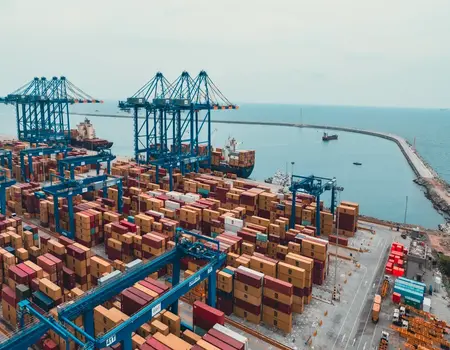
The physical blueprints of the project highlight its immense engineering scope. The $1 billion deepwater international seaport and container transshipment terminal at Vizhinjam is supposed to be 150 metres in width. To accommodate a massive logistics layout, about 2.5 to 2.75 km² ie 600 to 700 acres would be made available through reclamation of the sea.
To shield the harbor basin from the volatile, deep-sea swells of the Arabian Sea, the port would have two breakwaters of 1.5 km and 6 km each with harbour basin and wharfs. According to expert opinion, a high potential for a new port is being seen as India is going to need additional capacity in the coming years. Hence the relevance and significance of Vizhinjam port. When all development phases are fully executed, there would be about 30 berths, most of which would be capable of handling Mother Vessels simultaneously.
Infrastructure Foundations and Corporate Collaborations
An industrial node of this magnitude requires robust inland connectivity to efficiently distribute goods across the subcontinent. The Government has committed to develop the basic infrastructure, which includes rail and road connectivity to the port site, and has set aside Rs 450 crore for the purpose. This funding ensures wide multi-lane highways and state-of-the-art underground rail tunnels connect the maritime docks smoothly to national transport networks without disrupting local life.
- Development Model: The execution of these massive public-private partnership (PPP) frameworks is driven by specialized state agencies alongside major industry conglomerates.
Related work would be undertaken by a separate company, the Vizhinjam International Sea Port Ltd (VISL). Due to the massive geopolitical and financial rewards tied to this global transshipment gate, private enterprise interest has been fiercely competitive from day one. Apart from the Ambani brothers, several domestic companies as well as overseas majors have evinced interest in the development of the deepwater transshipment terminal, securing top-tier technical expertise for its operations.
The Coexistence of Maritime Might and Luxury Tourism
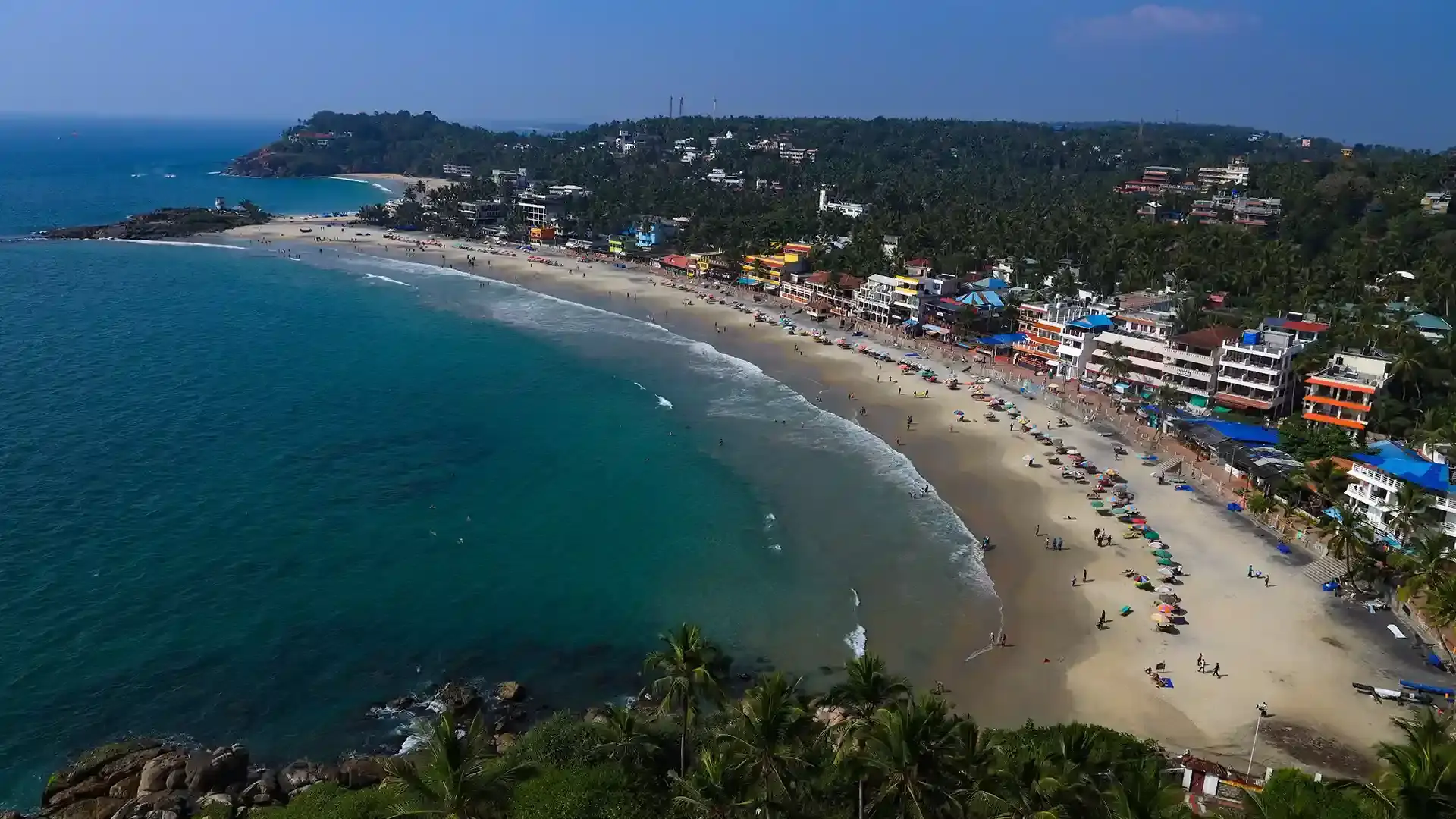
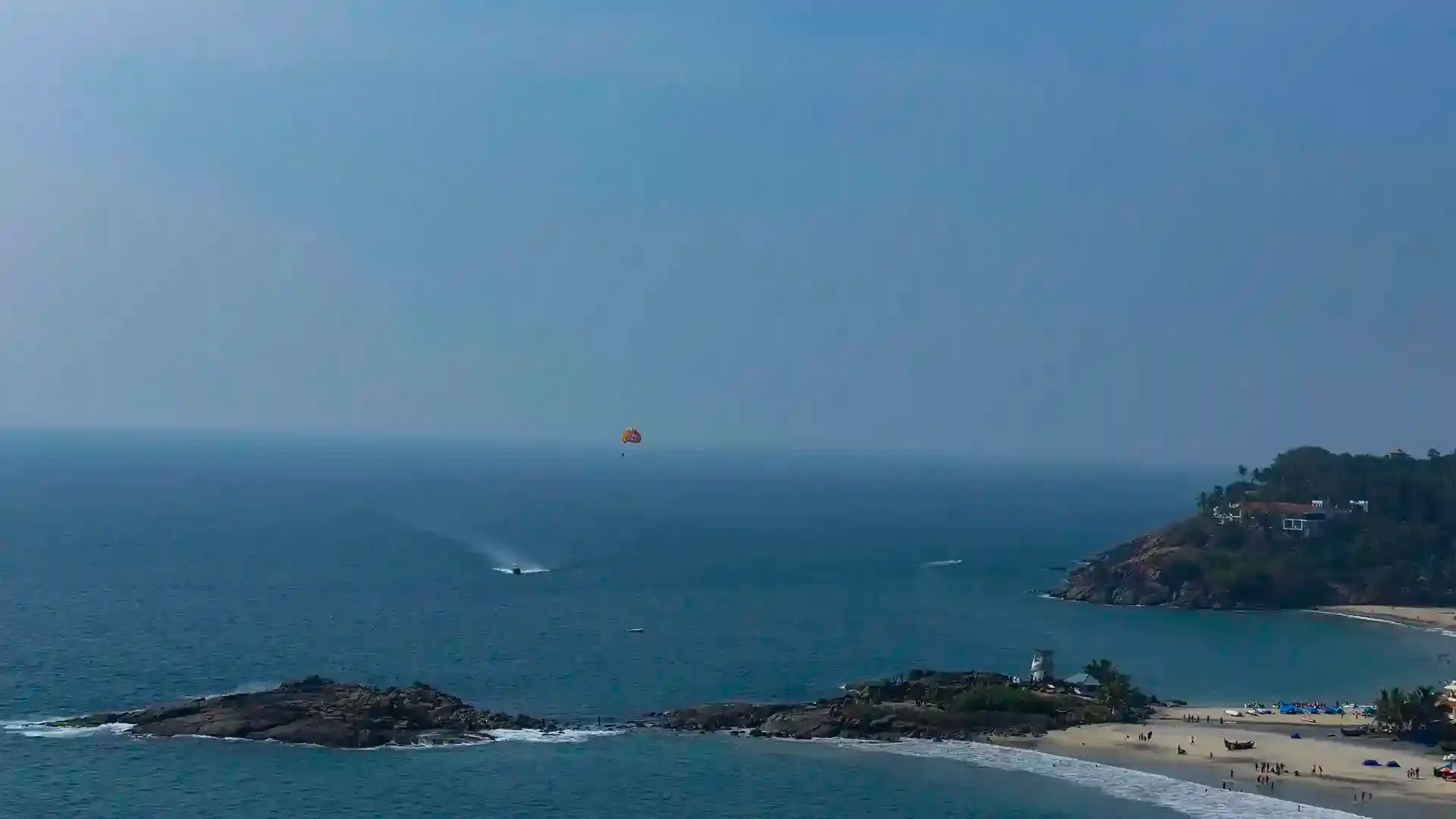
For travelers booking a holiday via Kovalam.com, a common question arises: Will a mega-port affect my beach holiday? The answer is a resounding no. Thanks to the unique coastal topography, the industrial shipping lanes are completely tucked away behind massive rocky capes, ensuring that the golden sands, clear swimming waters, and crashing surf of Lighthouse Beach remain pristine and undisturbed.
Instead, the economic boom has directly elevated the luxury travel sector in the immediate area:
- World-Class Hospitality: The influx of global maritime executives has spurred the growth of ultra-luxury beach resorts and elite business boutique stays.
- Ayurvedic Renaissance: The state-of-the-art ayurvedic treatment centers and luxury spas surrounding Vizhinjam have expanded significantly, catering to high-net-worth wellness travelers seeking holistic escape.
- Cruise Tourism Infrastructure: The expansion blueprints include a state-of-the-art luxury cruise terminal, making it possible for massive international passenger liners to dock directly, bringing global sightseers straight to Kovalam’s doorstep.
Practical Visitor Tips for the Kovalam-Vizhinjam Corridor
If you are staying in a Kovalam beach resort and wish to experience the maritime history and dramatic vistas of Vizhinjam, keep these helpful travel tips in mind:
- Best Viewpoints: For a spectacular panoramic look at the massive container ships and mega-cranes without entering restricted cargo zones, head to the top of the Vizhinjam Marine Aquarium cliffs or the iconic Vizhinjam Lighthouse.
- Local Seafood Culture: The Vizhinjam harbor area features casual, rustic seaside shacks serving some of the freshest fried fish, prawns, and calamari in Kerala, caught daily by local traditional fishermen.
- Commuting Ease: Since Vizhinjam is just a quick 3 km hop from central Kovalam, you can easily access it via a scenic 10-minute auto-rickshaw ride along the coastal road.
Gallery

.webp)